


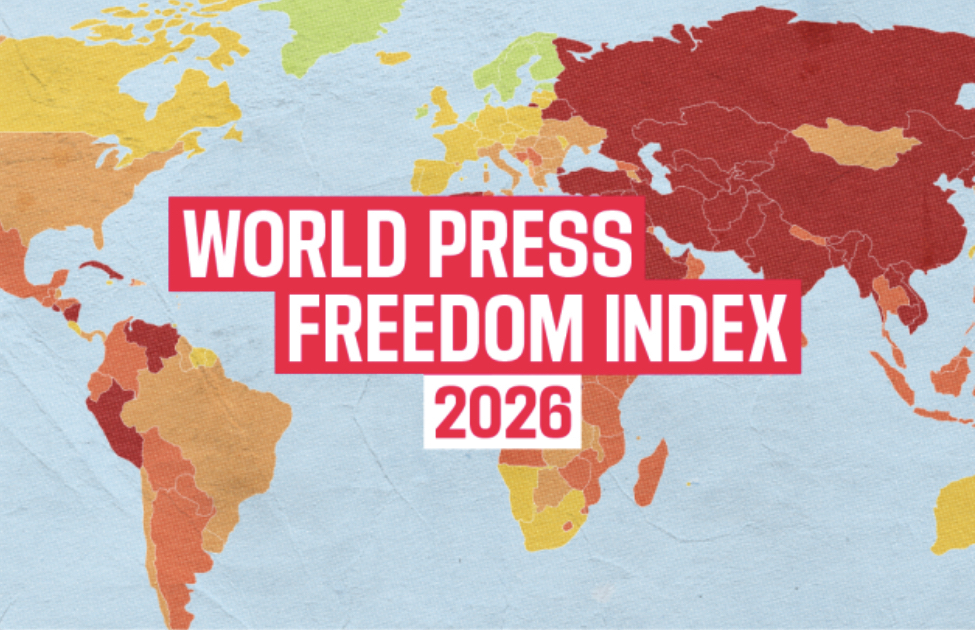
Let’s make no bones about it: New Zealand’s demotion in the latest World Press Freedom index is a disgrace. But who cares?
World Press Freedom Day last Sunday was not a day for New Zealanders to celebrate – we have fallen six places and are no longer in the top 20 nations on the index – but, frankly, it’s a day that passes largely unnoticed by the average Kiwi.
It ranks with the likes of World No-tobacco day (May 31, in case you didn’t know) and the International Day of the Snow Leopard (October 23).
The brutal truth is that, although most New Zealanders consume news one way or another, they have little regard for the health of the institutions that are the primary providers.
It does not matter whether the news is consumed through mainstream media or via the second, third or fourth iterations created on social media: It must first be sought, sifted, scribed, and recorded by journalists. Most of those journalists work within organisations dedicated to the craft of newsgathering.
Journalists themselves care about the state of the environment in which they do their jobs. So do the bodies that employ them. Academics who study them care about that environment and so, too, do a relatively small number who understand its importance to civil society. Most, however, do not give the state of our media a second thought.
Among them are far too many politicians, who see journalism either as an irritation they can do without, or a dying artform that will be replaced by something as-yet-unnamed that will rise like a shining phoenix from the digital whirlpool.
Politicians – and anyone who gives the index their fleeting attention – are the sort of people who will look at it and say: “Isn’t it wonderful that we sit at 22 on a list of 180?” They might add that being 11 places ahead of Australia is proof-positive that we’re a wonderful little country that punches above its weight. That phrase must, of course, be accompanied by the fanfare of heraldic trumpets. And, look, the United States fell by seven places.
In reality, the latest index from Reporters sans frontières/Reporters Without Borders, signals the increasing pressures under which journalism operates in this country. They are pressures that will ultimately threaten its existence.
These pressures may not be as immediately existential as the brutal realities facing journalists in the likes of Noth Korea and Eritrea, which sit 179th and 180th respectively and one should not minimise the gross shortcomings of countries that make up the lower echelons of the list. Nor should we ignore the bravery of journalists who literally risk their lives in the pursuit of truth.
That does not, however, negate or excuse a need to closely interrogate our own score and contemplate the consequences of future erosion.
So, where do we stand in 2026?
The Index measures five separate contexts. The political context assesses political pressure, professional standards, and the ability to hold power to account. The legal framework measures freedom from censorship and judicial sanction, access to information, and accountability for acts of violence against journalists. The economic context assesses economic constraints on journalism linked to government policies, non-state actors, and media owners themselves. The sociocultural assessment looks at denigration and attacks on the press, and constraints on coverage imposed by a dominant culture. Finally, the safety of journalists from physical, psychological or professional harm is measured and is based partly on reported abuses.
New Zealand’s overall score, which gives the global ranking, is 77.39 this year (down 3.99 points). The political (78.4 points) and security (91.76 points) scores are relatively unchanged but the economic score – essentially the viability of news media – is down 7.71 points on 2025 to 64.44 points. That decline is almost matched by the sociocultural situation, which had dropped by 7.58 to 75.95 points. It measures factors like verbal attacks on journalists and pressure to turn a blind eye.
Those numbers are worrying but it is the trend over a longer of period of time that is most concerning. Over the past decade we have suffered a fall in our global ranking that is truly alarming.
In 2016 New Zealand was ranked fifth, outperformed only by four European countries. We fell abruptly to 13th the following year but regained somewhat in 2018 to sit at 8th. In 2019 we almost regained our place alongside the Scandinavians and sat at 7th. By 2022 we had fallen out of the top ten again. And we have been on a continuing downward path – 13th in 2023, 19th in 2024, and 16th last year. Now, for the first time, we are out of the top 20. Ahead of us as nations such as South Africa, Latvia, Lithuania, and Czechoslovakia.
Charitably, Reporters Without Borders says New Zealand “remains the [Asia-Pacific] region’s model for press freedom, despite falling six places”. I read that as meaning the other countries in the region are respectively worse. When we were fifth – behind only Finland, the Netherlands, Norway and Denmark – we had something of which we could be truly proud. Falling 17 places since then is nothing to be proud about.
Globally, the index presents a gloomy picture. For the first time in its 25 year history, over half the countries now fall in the ‘difficult’ or ‘very serious’ categories for press freedom. The average score of all 180 countries has never been lower.
In a statement to mark World Press freedom Day, the Thomson Reuters Foundation’s director of media freedom initiatives, Will Church, released a statement in which he spoke of heightened threats and a “global trend of shrinking civic space”. He provided some chilling statistics:
- Freedom of expression has dropped 10 per cent globally since 2012.
- Self-censorship has surged by 63 per cent, as journalists increasingly avoid reporting on corruption, human rights, and environmental harm.
- One hundred and eighty six journalists were killed covering wars and conflict zones between 2022 and 2025 – a 67 per cent increase from the previous period.
- Three-quarters of women journalists experienced online violence in 2025.
Clearly the world has become a darker place and we can be thankful that we have been spared most of the most confronting effects. That does not, however, provide any room for complacency.
Last week I gave a talk to a very lively group on Waiheke Island. I was speaking about threats to democracy posed principally by disinformation. I explained that our news media represented a first line of defence against such weaponised lies but went on to show how that defensive line was under threat.
I told them that two decades ago, there were about 4000 journalists in New Zealand. A newsroom survey in 2024 put the current number at about 1400. This is fewer that the number of journalists employed by the New York Times. And the total continues to drop. The Workforce Development Council now estimates that are only about 1000, and a survey last month by the E Tū Union (to which journalists may belong) found more than 60 per cent do not see themselves in the industry in a decade’s time.
Numbers like that, plus the continuing low level of trust in media – and now our alarming fall in the press freedom ranks – have failed to cause alarm among the general public. And it gets worse.
I spoke to my Waiheke audience about a Helen Clark Foundation report on social cohesion that had shocked me. It showed that less than half the country thinks democracy is a very good idea and more than a third are only lukewarm about democracy. More than half of us think we would be better off putting rule in the hands of experts (I’m not quite sure how we define those). Even worse, 28 per cent think a dictator is a fairly good or very good option.
What have we come to? And, more importantly, where the hell are we heading?
I am on the doorstep of octogenarianism and, metaphorically at least, my voice does not have the strength it was once privileged to have. I will keep sounding like Cassandra…with very good cause. However, there is an urgent need for many, many more voices to shout warnings and to demand change.
KNIGHTLY VIEWS IS TAKING A MUCH-NEEDED REST FOR THE NEXT FORTNIGHT. THE TUESDAY COMMENTARY WILL RESUME ON MAY 19.
