Hard call (but the right call) on hate speech

There has been understandable anger and frustration at the announcement that harm provisions in the Human Rights Act will only be extended to religious communities. However, New Zealand will be a better place if the aggrieved can be a little more patient.

Yes, the LGBT+ community, women, the disabled and other ‘targets’ have already waited a long time for the protection that is their fundamental right. I understand why they have launched a petition. Their hopes of legislative change had been boosted by recommendations of the Royal Commission on the Christchurch Mosque Attacks related to social cohesion, and by the Department of Internal Affairs’ Content Regulatory Review.

Those hopes were dimmed by Justice Minister Kiri Allen’s announcement, but not dashed. She also announced that the Law Commission has been asked to undertake “an independent and thorough first principles review of legal responses to hate-motivated offending, and of speech that expresses hostility towards, or contempt of, people who share a common characteristic” (the italics are mine).

One might question why the Law Commission is to do another review when the Department of Internal Affairs review is already canvassing overseas regulation of harmful material. I think that, while there will be overlap, the Law Commission will concentrate on the role of the legal system in achieving a balance of rights: Toleration versus free speech. Continue reading “Hard call (but the right call) on hate speech”

NZME reaches a milestone some thought impossible

NZME has reached a milestone: Its digital publishing business is now profitable on a stand-alone basis. That means it can cover its newsroom and editorial costs without relying on its print operations.

The publisher and broadcaster highlighted the landmark in an investor presentation last week that was a commendably wide and deep appraisal of the group’s current and future prospects. At the same time, it gave some useful insights into the country’s overall news media landscape.

It was common knowledge that NZME’s digital strategy was tracking in the right direction but there were still a few surprises in the two-hour session that included a 150-slide PowerPoint presentation. Continue reading “NZME reaches a milestone some thought impossible”

Back to the future to train the next generation of journalists

There was a back-to-the-future aura around a full page advertisement in the Otago Daily Times last week. “Want to be a journalist?” it asked. “We’ll help you get there!”

The advertisement stated the ODT’s owner, Allied Press, was looking for five cadets “who have what it takes to be journalists in their South Island home town in 2023”.

It signalled its return to the sort of in-house cadet scheme that was standard practice in New Zealand when I started my career in journalism in 1965. Continue reading “Back to the future to train the next generation of journalists”

Alarm bells must bring out disinformation fire fighters


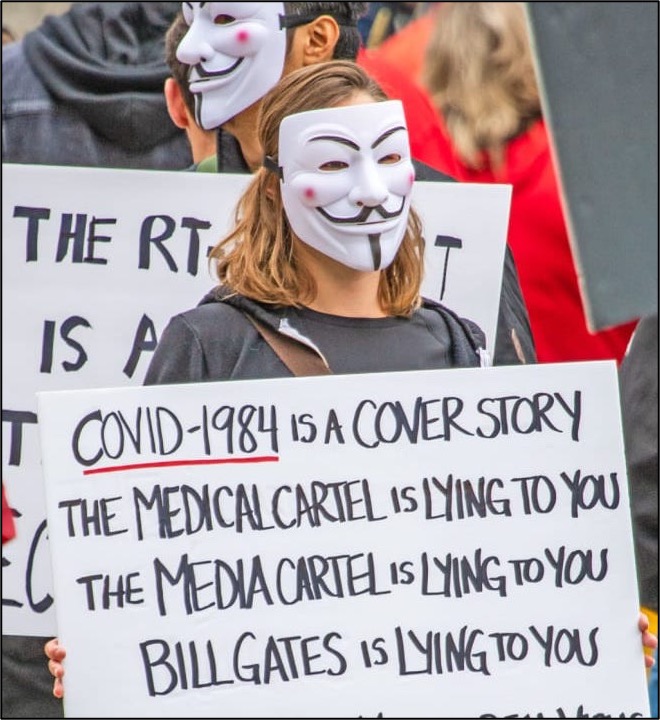
The cancellation of two disinformation seminars this week amid threats and harassment should be ringing very loud alarm bells.

The seminars, organised by the Disinformation Project and communicated through the Science Media Centre, were to allow journalists to discuss disinformation with a range of experts. However, details of the media-only events in Auckland and Wellington somehow appeared on extremist social media channels. Traffic on those channels suggested the events could be gate crashed and they were cancelled as a safety precaution.

The director of The Disinformation Project, Kate Hannah, told Newsroom political reporter Marc Daalder she had received a death threat after the decision to cancel had been made but before legitimate attendees had been notified. Members of the project had been scheduled to brief journalists.

What is disturbing about this episode – the latest in a string of intimidating actions – is that the invitations were privately despatched to individuals via the Science Media Centre. Like the Disinformation Project itself, the SMC is a highly reputable organisation (whose advisory board I had the privilege of chairing). The fact that a screenshot of the invitation then appeared on Telegram fringe channels raised the ugly possibility that one of the potential invitees shared it with someone connected to those channels, or that their email accounts have been hacked or otherwise compromised. Continue reading “Alarm bells must bring out disinformation fire fighters”